
OTR 2
DogByte GamesRacing
4.5439.00 Reviews
- Version
- 1.2.1
- Installs
- 1.00M
- Age Rating
- Everyone
Screenshots
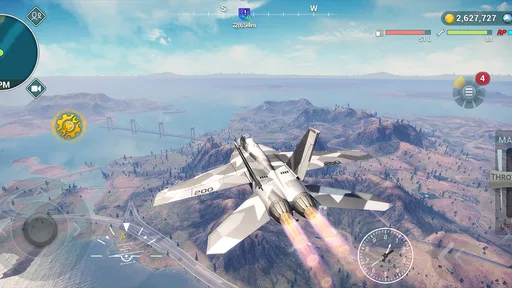
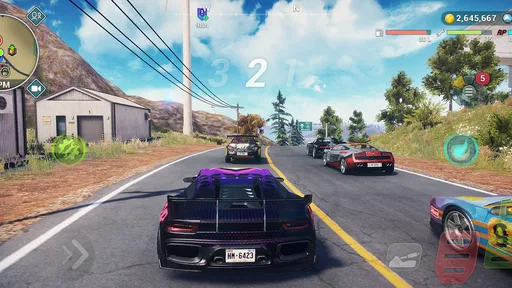
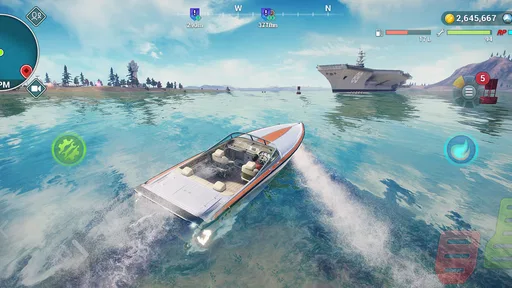
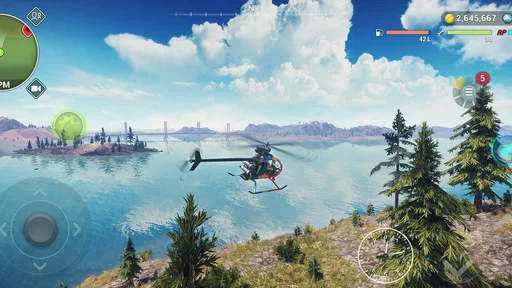
Our Review of OTR 2
 Analysis by Appyee
OTR 2 is a free racing game from DogByte Games that focuses on open-world driving rather than short, neatly separated races. I approached it as the kind of game I could pick up when I wanted to explore, test a vehicle on rough ground, and create my own route instead of simply following a lap counter. That difference is the main reason to try it. It is less about perfect cornering on a circuit and more about deciding where to go, how aggressively to drive, and whether a difficult path is worth the effort.
The game is listed for Everyone, runs on Android 6.0 or later, and is currently at version 1.2.1. It is free to install, with optional purchases ranging from $0.99 to $49.99 per item. Its 4.5 average from around 20 thousand ratings and more than a million installs suggest that the open-world truck-simulator idea has found a sizeable audience. I would still treat those figures as a starting point rather than a guarantee: this is a game whose appeal depends heavily on whether you enjoy patient off-road driving as much as fast racing.
Why the open-world driving focus changes the experience
I find that the open-world focus makes each drive feel less like a race to finish and more like a choice about what to tackle next. That freedom can make progress feel self-directed, so I pay attention to whether the game gives me enough reasons to keep exploring. The next thing I’d consider is how its goals and unlocks support that pace.
Exploration is the real feature, not decoration
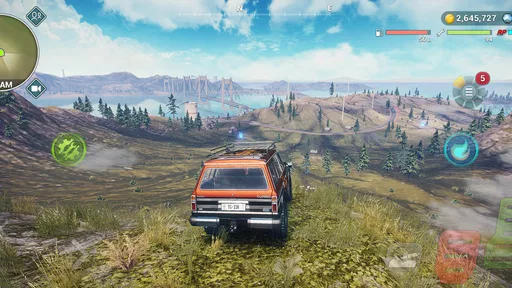
The most important capability in OTR 2 is the freedom to treat the environment as a driving problem. In a conventional racing game, the track tells me where to brake, where to turn, and which direction the next challenge lies. Here, the open setting makes route choice part of the entertainment. I am not only asking whether I can control the vehicle; I am also asking which slope, surface, or shortcut gives me the best chance of reaching the next objective.
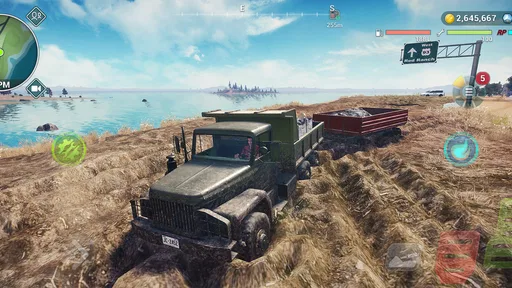
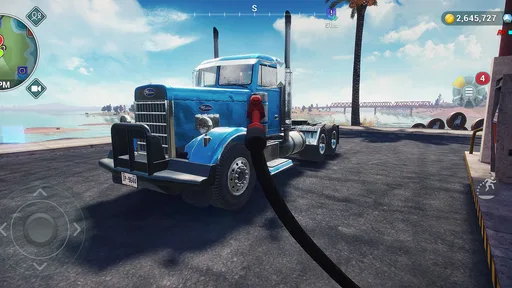
That creates a slower but more personal rhythm. A successful run can come from careful positioning rather than a dramatic burst of speed. I found that the satisfaction often arrives after working through an awkward section and seeing the vehicle finally climb, turn, or recover. The game’s truck-simulator identity matters because heavy vehicles make terrain feel like something to read and manage, not just scenery passing behind the car.
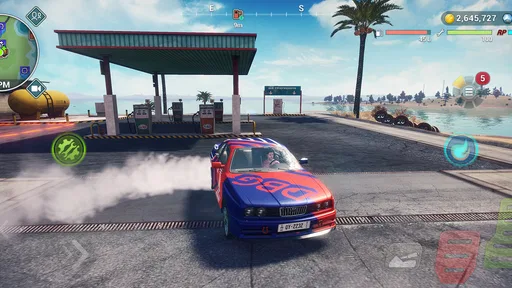
This approach separates it from the usual mobile racing alternatives. Arcade racers generally reward immediate acceleration, clean drifting, and repeated attempts on compact tracks. Open-world driving games may offer a larger place to roam, but they often emphasize traffic, city cruising, or visual spectacle. OTR 2 sits closer to an off-road playground. If you want a quick race with a clear winner after a few minutes, another racing game may suit you better. If you like making your own challenge from the landscape, this is where it earns attention.
What I pay attention to while driving
When I play, I try not to treat every obstacle as something to attack at full speed. A steep approach can punish a careless line, while a wider route may be slower but more reliable. That makes small decisions meaningful: approaching an incline with enough momentum, avoiding a sharp angle, and giving myself room to correct instead of forcing the vehicle into a bad position.
One useful habit is to scout before committing. I can pause my rush, look at the shape of the route, and decide whether the direct path is genuinely practical. This is a better workflow than repeatedly charging into the same difficult section. It also makes the game feel less random, because failed attempts become information about positioning and timing rather than simple bad luck.
The strongest part of the game is the conversation between vehicle and terrain. That may sound simple, but it changes how I measure progress. I do not need every moment to be fast. Reaching a destination with a clean, controlled approach can feel more rewarding than finishing a short race by relying on reflexes alone.
How the open setting works in an everyday play session
A realistic session for me would be a short break after work. I might begin with a clear intention to drive toward one destination, then spend extra time testing a nearby route because the terrain looks more interesting. If I have only a few minutes, I can still enjoy a small trip or practice a difficult approach. If I have longer, the same world supports a more relaxed outing where exploration becomes the goal.
That flexibility is valuable on a phone. I do not have to wait for a full multiplayer lobby, build a long championship schedule, or memorize a circuit before the game becomes enjoyable. I can use it as a focused challenge or as a casual driving space. The trade-off is that the experience depends on my willingness to create goals. Players who need constant events, unlock prompts, or tightly directed missions may find the freedom less exciting.
I also recommend adjusting expectations before the first session. This is not the best choice when I want a pure speed test. The open-world format gives me more control over the route, but it also means that the action can lose momentum when I choose a poor direction or spend too long recovering from an avoidable mistake. That is part of the simulation flavor, yet it will feel like friction to anyone expecting nonstop racing.
Practical techniques that make the driving more enjoyable
My first tip is to use difficult ground as a learning tool instead of immediately judging it as unfair. I try the approach once with speed, once with a more controlled line, and once after giving the vehicle a little more room to turn. Comparing those attempts helps me understand what the terrain is asking for. It is a simple method, but it prevents the common mobile-game habit of repeating the same failed input without learning anything.
My second tip is to separate exploration from progress. If I am trying to reach a particular place, I focus on a dependable route. If I am experimenting, I deliberately take the less obvious path and accept that the trip may end in a recovery or a restart. Mixing those two intentions can make the game feel frustrating; keeping them separate makes the same environment work for both challenge and relaxation.
A third useful approach is to treat momentum as a resource. Speed helps on some approaches, but excessive speed reduces the time available to correct steering. I prefer entering an uncertain section with enough movement to keep going while preserving control. This is especially helpful for players coming from arcade racing games, where holding the accelerator is often the default answer.
Finally, I would avoid judging the game during the first few minutes solely by how quickly it delivers excitement. Its appeal grows when I begin choosing routes and setting small personal goals. For example, I might attempt a climb without taking the obvious approach, then repeat it while trying to arrive with a smoother line. Those self-imposed experiments reveal more of the game than simply driving around until the novelty fades.
The best scenario for this particular game
OTR 2 is at its best when I want a solo driving session with room to improvise. It works well for someone who enjoys off-road scenery, heavy-vehicle handling, and the satisfaction of solving a route. The ideal player is not necessarily a serious racing specialist. In fact, a person who likes exploration games but wants more driving control may appreciate it more than someone who only plays competitive lap racers.
It is also a good fit for players who enjoy gradual mastery. The challenge is not limited to memorizing a track. I can improve by reading the landscape, choosing better approaches, and becoming more disciplined with steering and speed. That gives the game a practical learning curve: I notice improvement in the way I drive, not only in a number displayed after a race.
For a short daily scenario, I would use it as a focused break: choose one destination, attempt a route, and stop after I either complete it or understand why it failed. That keeps the session satisfying without turning it into an aimless drive. For a longer session, I would switch to exploration and deliberately search for routes that look difficult. The game supports both moods, provided I am comfortable setting the pace myself.
Where the trade-offs become noticeable
The same open-world freedom that gives the game character can also reduce urgency. A tightly designed circuit racer tells me exactly what matters in each second. Here, I may spend time repositioning, recovering, or reconsidering a route. I enjoy that when I am in a patient mood, but I would not recommend it as the only racing game for someone who wants constant competition and rapid restarts.
The free-to-play structure is another point to consider. The game costs nothing to download, but optional purchases are available, from $0.99 up to $49.99 per item. I would approach those purchases carefully and first decide whether the basic driving loop is enjoyable on its own. A game built around exploration should be judged by the quality of that core loop, not by the assumption that buying something will solve every moment of friction.
There is also a difference between simulation-flavored driving and realistic simulation in the strictest sense. OTR 2 gives the vehicle-and-terrain relationship center stage, but mobile controls still need to remain approachable. Players seeking a highly technical racing simulator with precise competitive setups may prefer a dedicated alternative. This game is more inviting when I want believable off-road decision-making without turning every control into a complicated training exercise.
The age rating of Everyone makes it easy to consider for a broad audience, especially families looking for a driving game without a mature presentation. Still, the rating does not remove the need for sensible purchase habits. If a child will play, I would keep an eye on optional spending and make sure the device’s purchase controls match the family’s preferences.
Who gets the most from the open-world format
The biggest beneficiaries are players who like choosing their own objectives. If I enjoy looking at a route and thinking, “Can I make that approach work?” the game gives me a reason to keep experimenting. Truck fans may also appreciate that the vehicle is not merely a visual skin placed on top of a standard track racer; the off-road framing makes control and terrain feel central to the experience.
Casual players can enjoy it too, but I think they should approach it as a driving playground rather than a traditional race ladder. The game is easy to recommend to someone who wants a free Android racing experience with exploration at its core and who does not mind occasional slow moments. DogByte Games has chosen a narrower identity than a generic arcade racer, and that focus is a strength when it matches the player’s taste.
I would suggest skipping it if your priority is online competition, tightly timed laps, or a constant stream of obvious objectives. I would also look elsewhere if you dislike correcting mistakes slowly or if you want a game that gives the same kind of excitement in every session. A circuit-based arcade racer is better for immediate action; a broader driving sandbox may be better for relaxed cruising. OTR 2 is the better choice when the challenge of the route itself is what interests you.
My recommendation after living with its central idea
After focusing on what makes the game distinct, I see OTR 2 as a specialized recommendation rather than an automatic choice for every racing fan. Its open-world truck driving works because it turns movement into a series of decisions: choose a line, manage momentum, recover from mistakes, and decide whether exploration is more valuable than efficiency. That gives ordinary travel a sense of purpose.
The current version is 1.2.1, and the game is available free on compatible Android devices running Android 6.0 or newer. I would start without spending money, use a few sessions to test whether the terrain-based driving holds my attention, and only then consider any optional purchase. That approach makes the decision simple and keeps the focus on the capability that matters most.
My final view is positive, with a clear condition: choose OTR 2 for open-ended off-road problem-solving, not for nonstop arcade racing. When I want to explore, experiment with routes, and feel that careful driving matters, it offers a satisfying alternative to ordinary track-based games. When I want immediate speed, strict competition, or a perfectly directed session, I would reach for something else. For the right player, that focused identity is exactly what makes it worth installing.
Verdict
Strengths of OTR 2
- Realistic truck physics make every delivery feel rewarding.
- Wide variety of routes and cargo keeps gameplay engaging.
- Detailed environments create an immersive driving experience.
- Smooth controls work well with both touch and tilt steering.
- Progression gives you reasons to keep upgrading your truck.
Limitations of OTR 2
- Some missions can feel repetitive after extended play sessions.
- Large downloads may use considerable storage space.
- Advanced trucks and upgrades may require significant grinding.
- Performance can vary on older Android and iOS devices.
- The learning curve may feel demanding for casual players.
Other Releases by DogByte Games
View All
OTR - Offroad Car Driving Game
Racing4.5
Similar Picks in This Category
View All
Hill Climb Racing
Fingersoft4.3

Dr. Driving
SUD Inc.4.2

Traffic Rider
skgames4.5

Asphalt 8 - Car Racing Game
Gameloft SE4.6

Race Master 3D: Car Racing
Beresnev Games4.6

Extreme Car Driving Simulator
AxesInMotion Racing4.3
Frequently Asked Questions
What is OTR 2, and what can I do with it?
OTR 2 is an entertainment-focused application designed for users who want to access its main content and features from a mobile device. After installing it, you can explore the available sections, adjust the settings, and use the app’s tools through its interface. The exact experience may depend on your device, operating system, region, and the version currently available.
Is OTR 2 free to download and use?
The availability and cost of OTR 2 may vary depending on whether you download it from Google Play, the App Store, or another official distribution channel. Before installing, check the store listing carefully for subscription details, optional purchases, advertisements, or feature restrictions. Some functions may be available without payment, while others could require registration or a paid plan.
Is OTR 2 safe to install on Android or iPhone?
For the safest experience, download OTR 2 only through a trusted and official store whenever possible. Review the developer name, permissions, privacy information, ratings, and recent user feedback before proceeding. Avoid modified APK files or unofficial download pages, since they may contain unwanted software. Also keep your operating system updated and grant only permissions that are necessary.
Does OTR 2 require an internet connection?
OTR 2 may require an active internet connection for downloading content, signing in, synchronizing information, or accessing online features. Performance can depend on your Wi-Fi or mobile-data quality, and using the app over cellular data may consume a noticeable amount of your allowance. Check the app’s behavior after installation to see whether any features remain available offline.
What should I do if OTR 2 does not work correctly?
If OTR 2 crashes, loads slowly, or refuses to open, first confirm that your device meets the app’s requirements and has sufficient free storage. Restart the app and device, check for updates, and verify your internet connection. On Android, clearing the app cache may help; on iOS, reinstalling can be useful. If the issue continues, contact the developer through the official support channel.
Play our best games!


